10 May 2026
Nano Banana Interior Design: The Complete 2026 Guide
Introduction
If you've spent any time on design Twitter or interior-design Reddit in the last six months, you've probably seen the screenshots — a tired living room photo on one side, the same room reimagined in five different styles on the other. Most of those mockups are coming out of Nano Banana, Google's image model that ships under the official name Gemini 2.5 Flash Image (and now Nano Banana 2 / Gemini 3.1 Flash Image, released Feb 2026).
This guide is the long version. Not the marketing brochure, but the version a designer would actually use — what the model is good at, what it still gets wrong, exact prompts that work, a workflow from reference photo to client mockup, and where it fits next to Midjourney, Freepik and the Nano Banana Pro tier.
By the end you'll have everything you need to start staging rooms in an afternoon.
What Nano Banana Is (And Why Interior Designers Care)
Nano Banana is the friendly name for Gemini 2.5 Flash Image, Google's native multimodal image model. The Feb 2026 successor — Nano Banana 2 — runs as Gemini 3.1 Flash Image Preview and is now the default in the Gemini app.
For beginners who are completely new to Nano Banana workflows, this beginner guide explains the setup and fundamentals in a simpler way before diving into advanced interior workflows:
Nano Banana Guide For Beginners
For interior design work, three properties matter more than anything else:
It Edits, Not Just Generates
Most AI image models will draw you a "modern living room" from scratch. Nano Banana takes the photo of your actual living room and rearranges it — same windows, same proportions, new sofa, new walls.
It Maintains Object And Layout Consistency Across Edits
Nano Banana 2 maintains the resemblance of up to five characters and 14 objects in a single workflow.
It Pulls From Real-World Knowledge
Ask for "a Scandinavian living room in the style of Studio Oink" or "a Japandi bedroom with a tatami platform bed" and the model knows what those references mean.
When To Use Nano Banana For Interior Design (And When Not To)
Nano Banana Shines For
- Client mockups before you commit to a purchase order.
- Real estate virtual staging.
- Mood board generation from a single reference.
- Pre-renovation visualization.
- Color and material swaps.
Where It Doesn't Replace A Designer
- Floor plans and dimensions.
- Structural changes.
- Photoreal interiors for hospitality or development sales.
A Useful Frame
Nano Banana replaces sketchbooks and Photoshop comps, not engineering drawings.
Setting Up: Where To Run It
1. Gemini App (Web / Mobile)
- Cost: Free with limits, paid via Google AI Pro
- Best for: Casual use, one-offs
2. Google AI Studio
- Cost: Free tier, then pay-per-image
- Best for: Designers running 10 to 100 images per week
Official Gemini 2.5 Flash Image documentation and API setup guide:
Gemini 2.5 Flash Image Documentation
3. Google AI / Vertex AI API
- Cost: $0.039 per image at $30 per 1M output tokens
- Best for: Studios building internal tools
4. OpenRouter
- Cost: Approximately $0.04 per image
- Best for: Multi-model workflows
If you want to use Nano Banana through OpenRouter instead of Google's direct API, this setup walkthrough explains the process:
Nano Banana In OpenRouter Guide
The Prompt Anatomy That Actually Works
Most failed interior-design prompts fail for the same reason: the prompter writes a paragraph of style adjectives and forgets to tell the model what to keep.
A Prompt That Works Has Six Parts
1. The Anchor
"Keeping the room layout, window position, and ceiling height the same..."
2. The Replacement Subject
"...replace the sofa with..."
3. The Specifics
"...a low-profile bouclé sectional in cream..."
4. The Style Modifier
"...in a minimalist Scandinavian aesthetic..."
5. The Light And Material Cues
"...with soft natural light from the left..."
6. The Output Instruction
"...photorealistic, interior magazine quality, no people."
50+ Prompts By Room And Style
1. Living Room — Style Variants
Scandinavian Minimalist
Keep the layout. Restyle this living room in Scandinavian minimalist: white walls, light oak floor, cream bouclé sofa, single statement floor lamp, one large abstract canvas above the sofa, no clutter.
Mid-Century Modern
Keep the layout. Restyle in Mid-Century Modern: walnut floor, olive velvet sofa, tapered wooden legs, sunburst clock on the wall, mustard yellow accent chair, warm brass lamp.
Japandi
Keep the layout. Restyle in Japandi: low platform sofa in oatmeal linen, tatami-inspired rug, single ikebana arrangement, washi paper pendant lamp, walnut and oak mix.
Industrial Loft
Keep the layout. Restyle in Industrial Loft: exposed brick on one wall, dark leather chesterfield sofa, cast iron Edison bulb pendant, steel-frame coffee table, raw concrete floor.
Maximalist
Keep the layout. Restyle in Maximalist: deep emerald wall, velvet jewel-tone sofa, gallery wall of 12 framed prints, brass floor lamp, patterned Persian rug.
2. Bedroom — Style Variants
Modern Farmhouse
Keep the bed position and window. Restyle this bedroom in Modern Farmhouse: shiplap accent wall, white linen bedding, jute rug, reclaimed wood nightstands, single woven pendant.
Boutique Hotel
Keep the bed position. Restyle in Boutique Hotel: deep charcoal walls, brass-accented headboard in tan leather, crisp white bedding with a black throw blanket, two matching brass sconces.
Japandi
Keep the bed position. Restyle in Japandi: low platform bed in white oak, cream linen bedding, single washi paper pendant, ikebana arrangement on a built-in shelf, tatami rug.
The Workflow: From Reference Photo To Client-Ready Mockup
Step 1 — Capture The Reference Photo
Shoot the room with your phone in landscape, with the most light available.
Step 2 — Open The Image In Nano Banana Via Google AI Studio
Upload, then write the anchor first.
Step 3 — Iterate, Don't Restart
Edit the output instead of rewriting the whole prompt.
Step 4 — Lock The Style
Build out the room gradually.
Step 5 — Generate A Second Angle
Create alternate views for spatial context.
Step 6 — Annotate For Client Review
Add paint codes, fabric brands, and source links.
Step 7 — Set Realistic Expectations
Clarify that these are concept mockups, not buildable specifications.
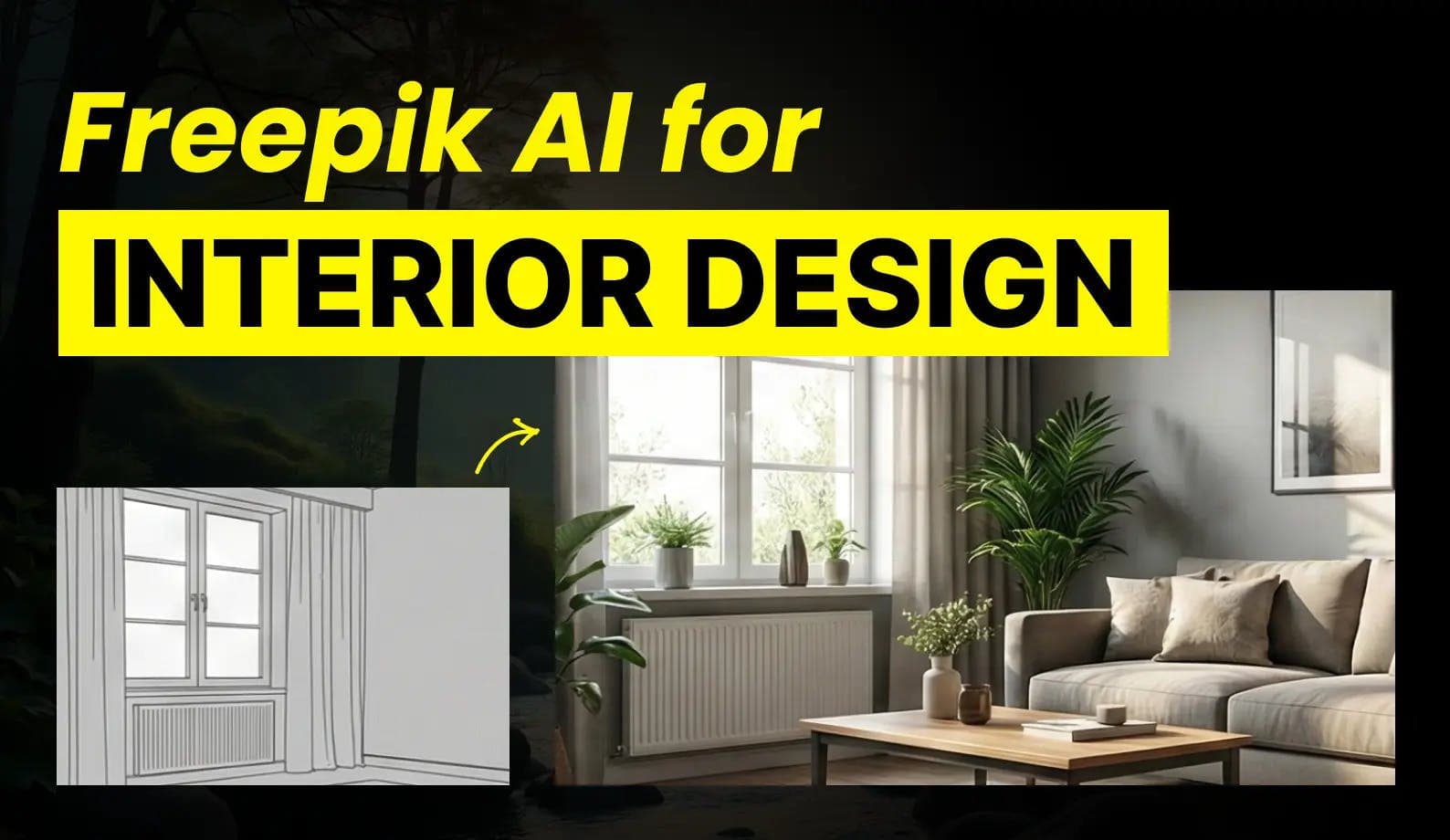
Nano Banana Vs Midjourney, Freepik, And The Pro Tier
Edit A Real Photo Of A Real Room
Best Tool: Nano Banana
Generate A Room From Scratch With Maximum Aesthetic Punch
Best Tool: Midjourney v7
Bulk Variation Generation
Best Tool: Freepik
Highest Fidelity Client Mockups
Best Tool: Nano Banana Pro
Free Or Near-Free Experimentation
Best Tool: Nano Banana on Google AI Studio
Where It Still Fails (And How To Work Around It)
1. Tiny Text Comes Out Garbled
Workaround: ask for unreadable text or closed books.
2. Mirror Reflections Don't Match
Workaround: place decorative objects in front of mirrors.
3. Window Views Change
Workaround: specify “same view through the window.”
4. Paint Codes Are Interpretive
Workaround: treat outputs as visual references only.
5. Furniture Proportions Drift
Workaround: anchor proportions explicitly.
6. Fabric Textures Look Artificial
Workaround: stay with room-wide framing.
Pricing In 2026: What You'll Actually Pay
Nano Banana 2
Free through Gemini with optional paid plans.
API Access Via Google
Approximately $0.039 per image.
API Access Via OpenRouter
Approximately $0.04 per image.
Nano Banana Pro
Higher fidelity at higher cost.
Frequently Asked Questions
Is Nano Banana Free For Interior Design Use?
Yes, with daily limits in Gemini.
Can I Use Nano Banana Images Commercially?
Yes, under Google's terms.
How Is Nano Banana 2 Different?
Better text rendering, stronger consistency, improved real-world knowledge.
Can Nano Banana Generate Floor Plans?
Not accurately enough for production work.
How Do I Keep Styles Consistent Across Images?
Use prior generated images as references.
What's The Difference Between Nano Banana And Midjourney?
Nano Banana edits real photos. Midjourney creates stronger from-scratch concepts.
Try The Workflow Yourself
If you've read this far, the best next step is to actually run the prompts. Take one room photo, run prompts 1–5 from the Living Room section, and see which style speaks to you. The whole exercise takes 20 minutes and changes how you think about every project after.