27 Jul 2026
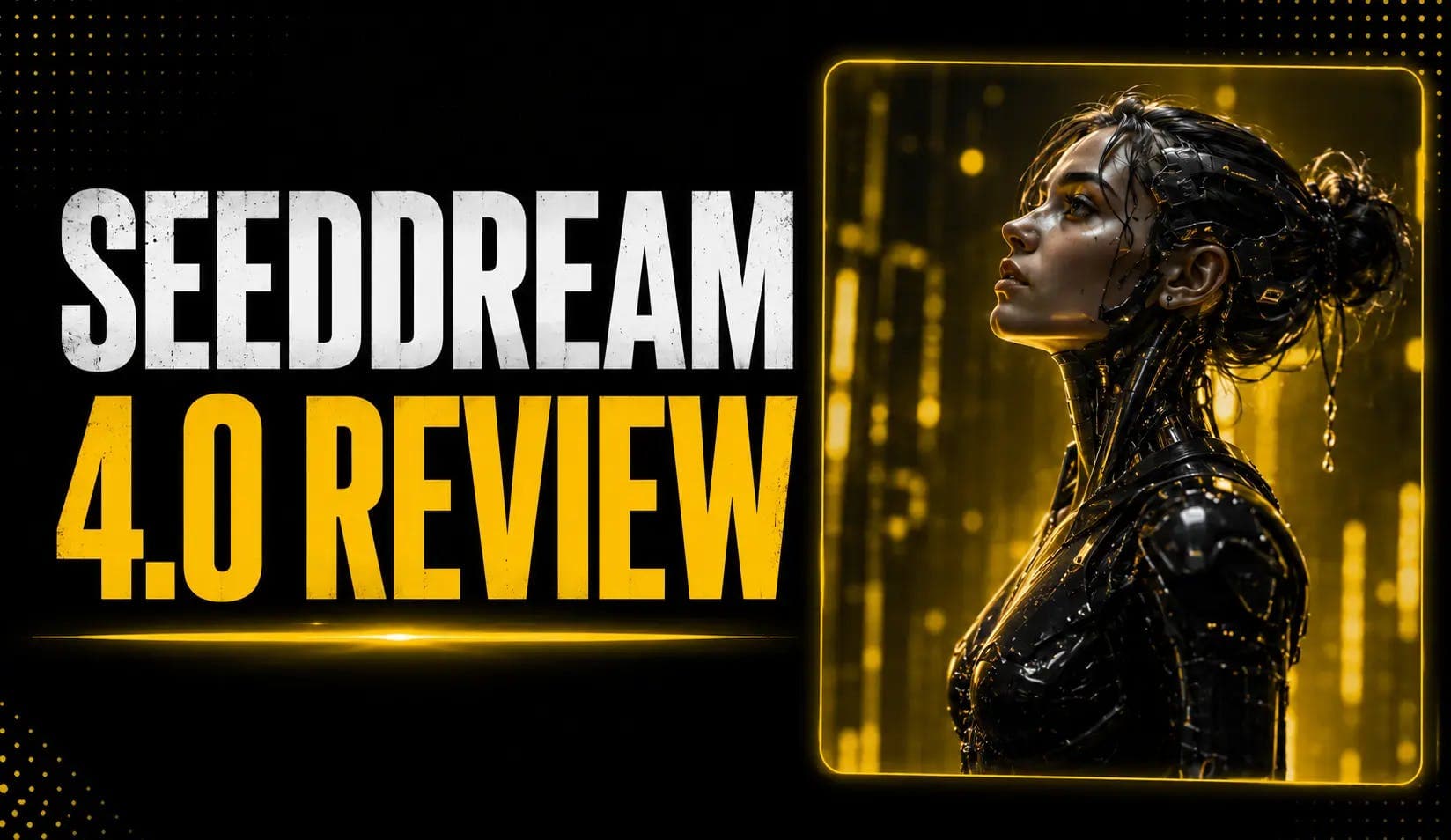
SeedDream 4.0 Review: What's New, How It Compares to Nano Banana
Introduction
For a few months in late 2025, SeedDream 4.0 did something no one expected: it beat Google's Nano Banana at the top of the independent image-model leaderboards. ByteDance — the company behind TikTok — shipped a model with native 4K output, ferocious speed, and multi-image fusion that photographers and marketers genuinely noticed. This review covers what's new in 4.0, how it compares to Nano Banana, Google's Gemini image model, and whether it deserves a spot in your workflow.
As of mid-2026, SeedDream 4.0 has already been succeeded by 4.5 and a 5.0 Lite. Treat 4.0 as the proven, widely-supported baseline rather than the bleeding edge.
What SeedDream 4.0 Is
Released September 9, 2025, SeedDream 4.0 is ByteDance's unified image model — a single system for both text-to-image generation and general-purpose editing, per the official release post. It merges what used to be two separate models (Seedream 3.0 generation + SeedEdit 3.0 editing) into one unified architecture.
You access it through ByteDance's own platforms (Dreamina/Jimeng, Doubao) and a range of third-party API hosts. The technical report on arXiv covers the architecture and MagicBench benchmark details for those who want the deep technical read.
What's New in 4.0
The 4.0 jump was substantial. The headline additions:
- Native 4K resolution — up from 2K in 3.0, with adaptive aspect ratios up to 3840×2160.
- Unified generation + editing — text-to-image, image-to-image, single- and multi-image edits, and composition in one model.
- Multi-image input — accepts up to roughly a dozen reference images at once, ideal for virtual try-on and part assembly. Compare with Nano Banana's multi-image fusion capability.
- Native visual-signal control — Canny, Depth, and Mask guidance without requiring an external ControlNet layer.
- Advanced text rendering — formulas, tables, charts, and infographics render cleanly.
- In-context reasoning — solving puzzles, continuing comics, respecting physical and temporal constraints across a scene.
- 10× faster inference than 3.0 — 10-step sampling reaching roughly 50-step quality, per the technical report.
SeedDream 4.0 API Pricing
There's no single consumer price — it's API-based, and costs vary by host. Across hosts the range runs roughly $0.0175–$0.069 per image. That's competitive with Nano Banana's $0.039 official rate — and on the cheapest hosts, notably cheaper.
| Host | Approx. Cost per Image | Notes |
|---|---|---|
| Official reference | ~$0.030 | — |
| fal.ai / Replicate / WaveSpeed | ~$0.027–$0.030 | Most commonly cited third-party hosts |
| EvoLink | ~$0.018 | |
| Kie.ai | from ~$0.0175 | Cheapest found; verify before using |
A 2K image generates in a few seconds; 4K is available on demand. Verify pricing directly with each host before committing, as rates shift with model versions.
SeedDream 4.0 vs Nano Banana
This is the comparison most readers came for. Green-highlighted cells indicate where SeedDream wins; blue-highlighted cells where Nano Banana holds the edge. For a deeper breakdown, see our full NanoBanana vs SeedDream 4.0 head-to-head.
| Factor | SeedDream 4.0 | Nano Banana (Gemini 2.5 Flash) |
|---|---|---|
| Peak Resolution | Native 4K (up to 3840×2160) | Lower default (~1024px); 4K on Pro |
| Style Profile | Creative, artistic, strong style transfer | Photorealistic, logic-driven, real-world accurate |
| Multi-Image Fusion | Excellent (up to ~12 refs) | Strong |
| Text Rendering | Very strong | Good (best-in-class on Pro) |
| Content Restrictions | Fewer guardrails | Stricter (refuses celebrities, weapons, adult) |
| Access Model | API / third-party hosts (fragmented) | Clean consumer app + API |
| Price Per Image | From ~$0.0175 (cheapest host) | $0.039 official |
| Benchmark Peak (Artificial Analysis) | Topped T2I + editing arenas at release | Just behind at that time; lead may have reversed |
At its peak, SeedDream 4.0 topped both the Text-to-Image and Image Editing arenas on Artificial Analysis, edging Nano Banana by a narrow ELO margin (roughly 1,205 vs 1,201). TechRadar's reviewer called it "the best I've ever seen". Leaderboard numbers shift over time — check the live page before citing them.
The Honest Pros and Cons
| ✔ Where SeedDream 4.0 Wins | ✖ Where It Falls Short |
|---|---|
| Genuine native 4K — real advantage for print and large-format work | Fewer safety guardrails cut both ways — a liability for brand-safe workflows |
| Excellent multi-image fusion and style transfer | Artistic lean can drift from photorealistic accuracy where Nano Banana wins |
| Very fast; often returns multiple variations per prompt | Access fragmented across API hosts rather than one clean consumer app |
| Strong text rendering including formulas, tables, and charts | Superseded by 4.5 and 5.0 Lite — adopting a proven-but-older model |
| Fewer content restrictions than Google; useful for creative-first workflows | |
| Competitive API pricing — as low as ~$0.0175 per image |
Which Should You Choose?
They're not really the same tool. SeedDream leans creative studio; Nano Banana leans reliable, grounded editor.
See the Demos
This side-by-side runs a dozen prompts through both models so you can judge the output difference directly:
Also worth watching:
Frequently Asked Questions
Is SeedDream 4.0 Better Than Nano Banana?
At its release, SeedDream 4.0 narrowly topped independent leaderboards over Nano Banana, mainly on native 4K and style transfer. But Nano Banana wins on photorealistic accuracy, brand-safe guardrails, and ease of access. The "better" model depends on whether you value creative output or reliable, grounded editing. For the deeper side-by-side, see our full head-to-head comparison.
How Much Does the SeedDream 4.0 API Cost?
Roughly $0.03 per image at the official rate, and as low as ~$0.0175 on hosts like Kie.ai. The range across hosts is about $0.0175–$0.069 per image. Verify current rates before committing.
What Resolution Does SeedDream 4.0 Support?
Native 4K (up to 3840×2160), a step up from the 2K ceiling in SeedDream 3.0, with adaptive aspect ratios.
Is SeedDream 4.0 Still the Newest Version?
No. As of mid-2026, ByteDance has released Seedream 4.5 and a 5.0 Lite. Version 4.0 remains widely supported and well-benchmarked, but it's no longer the latest.
Where Can I Use SeedDream 4.0?
Through ByteDance's own platforms (Dreamina/Jimeng, Doubao) and third-party API hosts including fal.ai, Replicate, WaveSpeed, EvoLink, and Kie.ai.
The Verdict
SeedDream 4.0 earned its moment at the top of the leaderboards, and for 4K creative work at a low per-image cost, it still delivers. If your work is brand-safe and photorealism-first, Nano Banana remains the safer pick. Try SeedDream through a cheap API host on a batch of your real prompts, compare the 4K output to your current tool, and let the results — not the leaderboard — decide.